
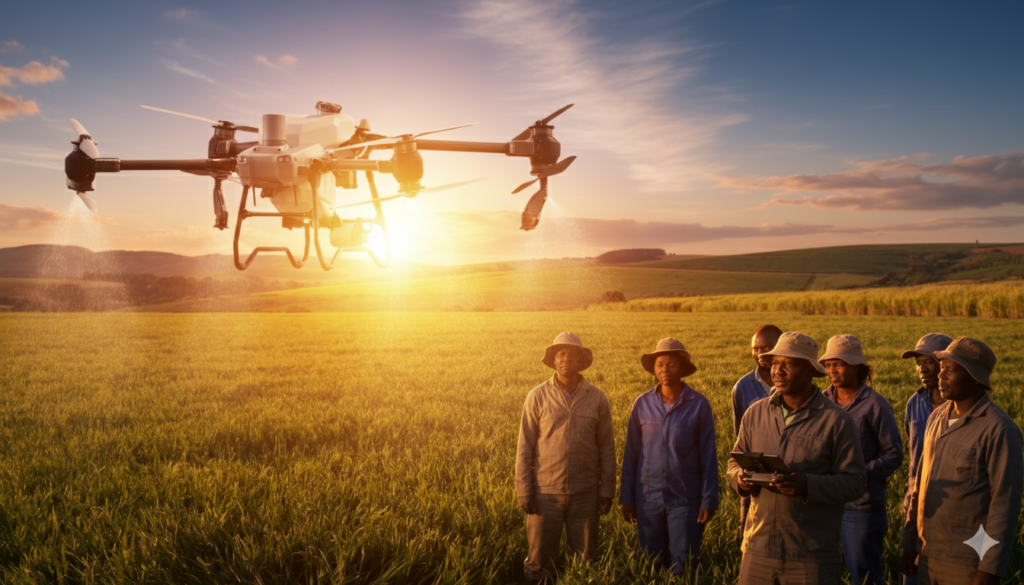
Africa’s agricultural landscape is defined by paradox. It’s a continent where over 60% of the population relies on farming for livelihoods [1], yet smallholder farmers—who produce up to 80% of the food in sub-Saharan Africa [1]—operate on the razor’s edge of survival.
Plagued by climate volatility, limited access to capital and technology, labor shortages, pests, and inefficient resource use, their yields often fall far below potential.
Enter the drone: no longer just a military or hobbyist tool, but a rapidly evolving platform poised to level the playing field.
Crucially, it’s the Drone-as-a-Service (DaaS) model that is unlocking this potential, transforming drones from inaccessible luxuries into practical, affordable tools for the continent’s backbone—the small-scale farmer.
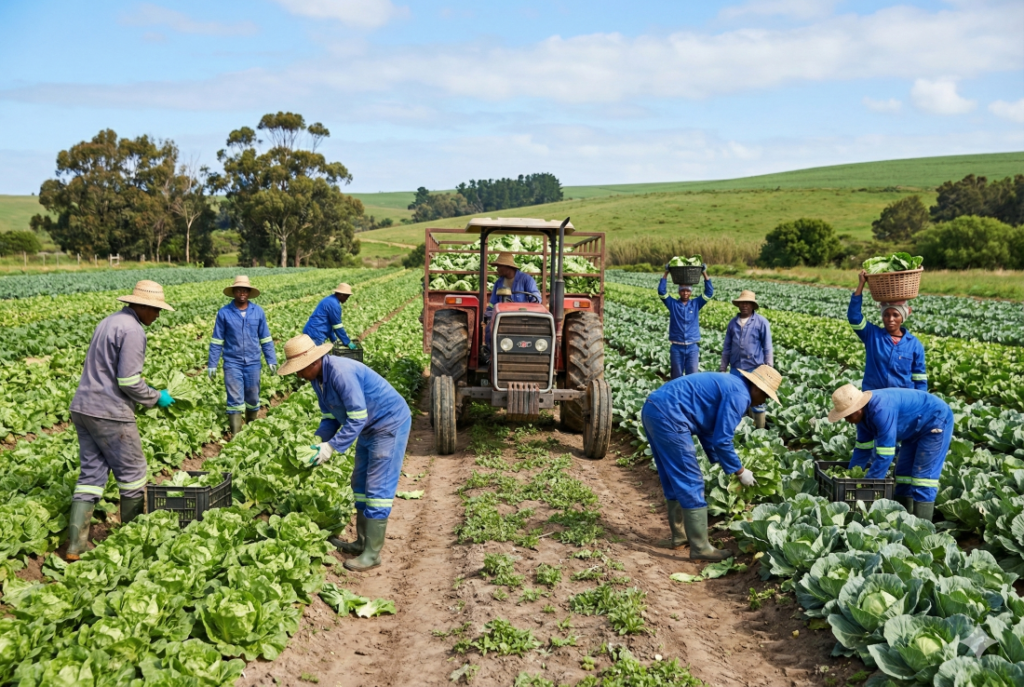
The Smallholder Challenge: Why Precision Matters
Traditional farming methods for smallholders often involve blanket applications of water, fertilizer, and pesticides—costly, wasteful, and environmentally damaging [2].
Scouting vast fields on foot is time-consuming and imprecise.
Detecting a nascent pest outbreak or nutrient deficiency early enough to act preventatively is often impossible. Climate change intensifies these pressures, bringing unpredictable droughts, floods, and invasive species [2].
The result? Stagnant productivity, food insecurity, and deepening poverty traps. Precision agriculture offers solutions, but satellite imagery lacks resolution, and ground-based sensors are often too expensive and complex for fragmented small farms.
Drones bridge this gap perfectly: they are affordable to access (via DaaS), highly maneuverable, and capable of ultra-high-resolution data capture and targeted action at the field level.
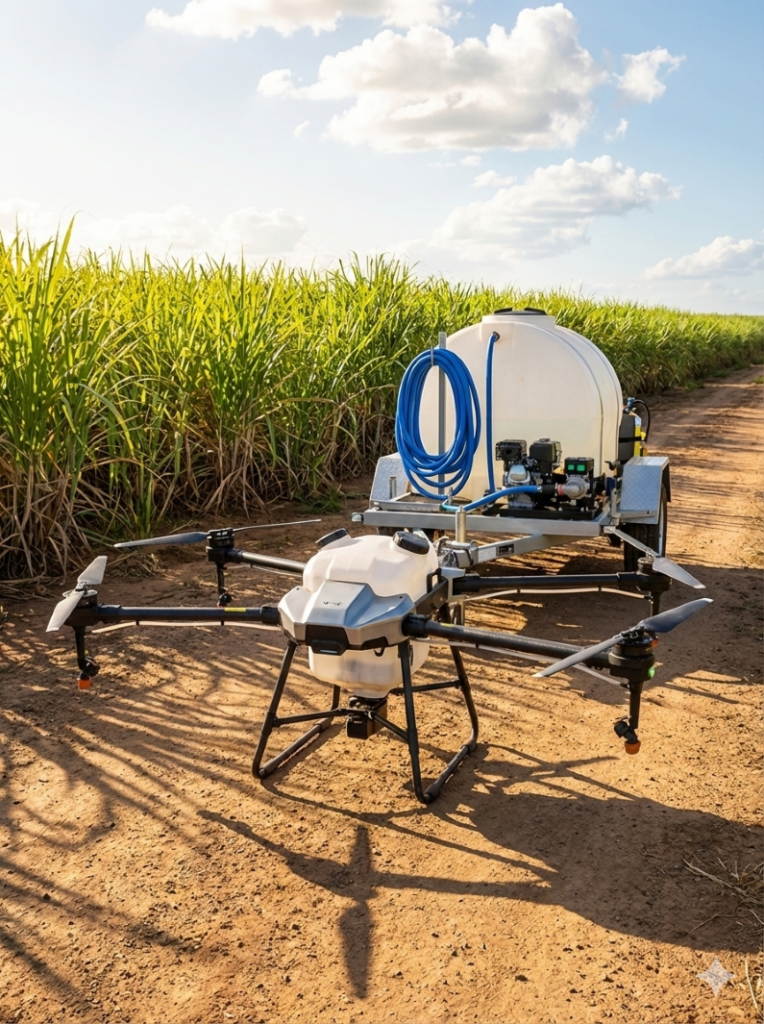
Drones in Action: The DaaS Toolkit for Resilience
The true power lies not just in the drone, but in the service it delivers. DaaS providers operate the technology, interpret the data, and execute tasks, allowing farmers to pay only for the specific outcome they need. Here’s how this model is reshaping realities across Africa:
- Precision Crop Protection: Saving Crops, Saving Costs:
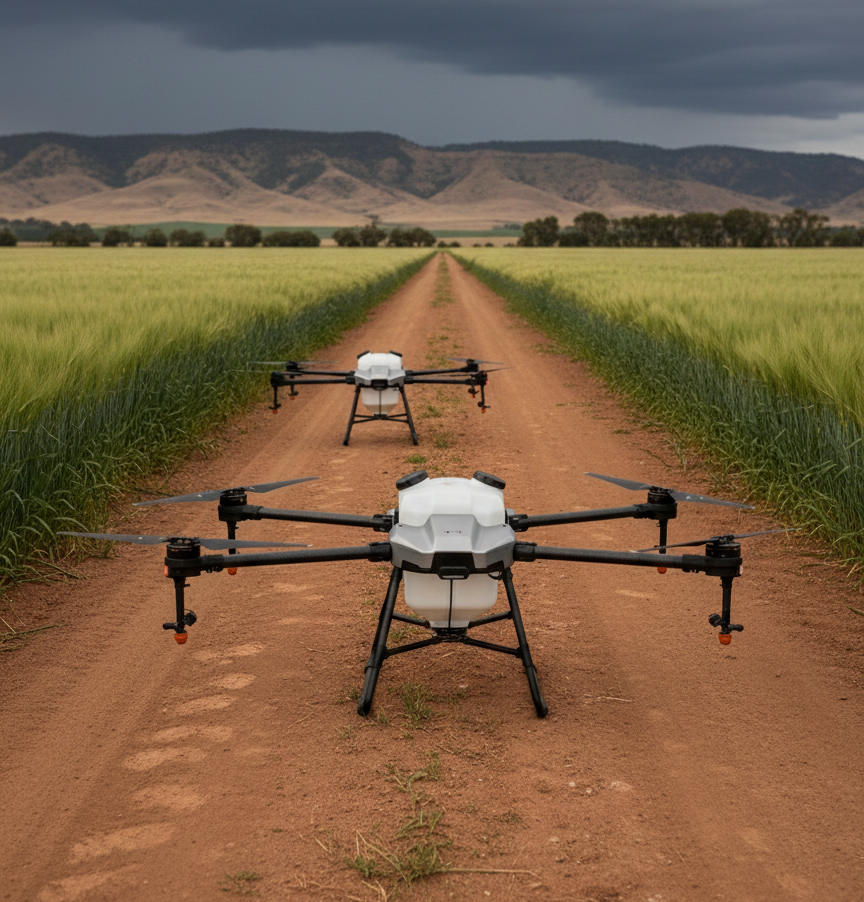
Pest & Disease Control: During the devastating 2020 desert locust swarms in East Africa, drones proved indispensable. Companies like Swoop Aero (operating in Kenya, Malawi, and Zambia) deployed fleets for rapid surveillance and targeted pesticide spraying, covering large areas quickly and minimizing chemical use by up to 75% compared to manual methods [3]. For a smallholder in Zimbabwe, a single DaaS spray mission against fall armyworm could save an entire maize crop—a difference between feast and famine. The precision reduces chemical runoff, protecting water sources and beneficial insects.Invasive Species Management: Controlling weeds like Parthenium hysterophorus (famine weed) in Ethiopia or water hyacinth clogging fisheries in Lake Victoria is labor-intensive and often ineffective manually. Drones enable precise herbicide application only where needed, drastically reducing costs and environmental impact for community-level management programs [14].
- Optimizing Inputs: Fertilizer & Seeding with Surgical Precision:
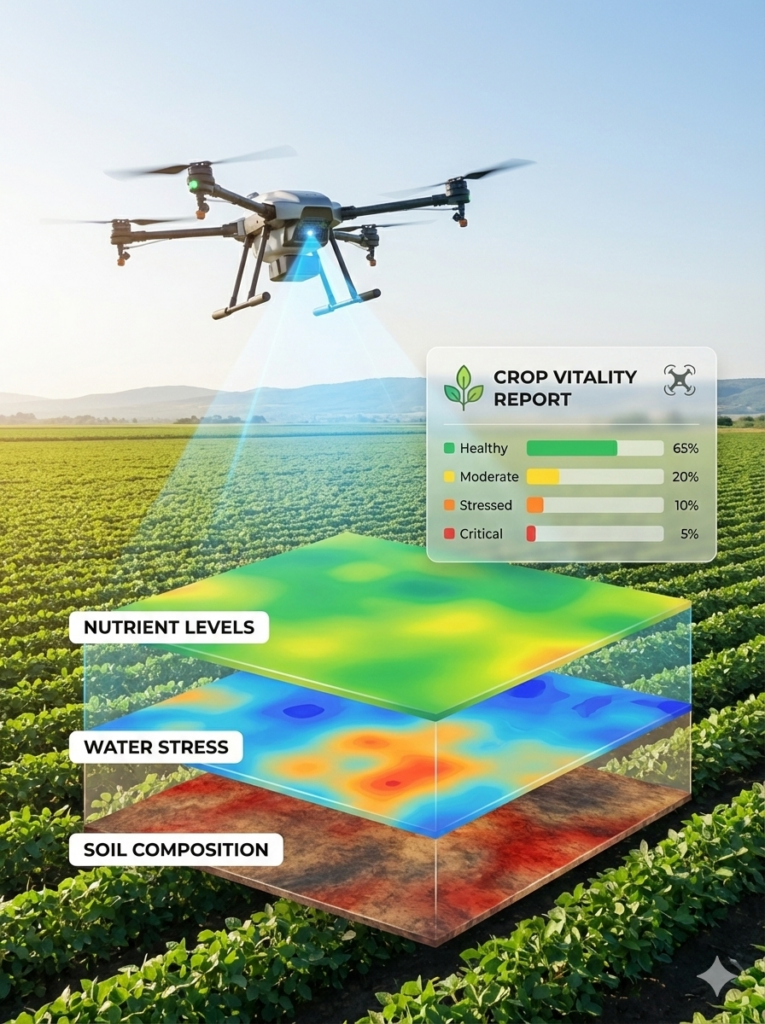
Variable Rate Application (VRA): Drones equipped with multispectral cameras (like those used by Hello Tractor’s platform across Nigeria, Kenya, and Tanzania) generate detailed field maps showing plant health (NDVI) and soil variability [4].
DaaS operators then adjust fertilizer application rates on the fly, applying more to deficient areas and less to healthy ones. This can boost yields by 15-25% while reducing fertilizer costs by 20-30%—a massive win for cash-constrained farmers [14].Efficient Seeding & Replanting: In degraded or hard-to-reach areas, drones like those piloted by BioCarbon Engineering (in Mozambique and South Africa) can disperse seed pods at high speed and precision for reforestation or cover cropping [11].
For smallholders practicing agroforestry or needing to quickly replant after localized damage, this DaaS offers unprecedented efficiency. - Livestock & Land Management: Eyes in the Sky for Holistic Farming:
Livestock Monitoring: Herding and monitoring livestock over vast, often rugged terrain is physically demanding. Drones enable farmers to count animals, check water points, identify injured or sick livestock, and even deter predators, saving hours of daily labor and reducing losses [6].
Thermal cameras are crucial for night checks.Earth Dam & Water Resource Sealing: Small earth dams are vital water sources but prone to leaks. Drones can efficiently map dam structures, identify seepage points using thermal imagery, and even apply specialized sealants precisely where needed, extending dam life and conserving precious water—a critical service emerging in arid regions [14].
- Data-Driven Decisions & Risk Mitigation: The Foundation of Resilience:
Hyperlocal Data Collection: Beyond spraying, the core DaaS value is generating actionable intelligence. Regular drone flights provide centimeter-level maps showing plant stress, moisture levels, emergence rates, and yield predictions before problems become visible to the naked eye. Startups like Zenvus (Nigeria) specialize in translating this data into simple SMS or voice messages for farmers with basic phones [9].
Revolutionizing Agricultural Insurance: One of the biggest barriers for smallholders is accessing affordable insurance. Traditional claims assessment is slow, costly, and prone to fraud. Drones enable parametric insurance.
Companies like Pula (operating across 10+ African countries) use drone and satellite data to trigger automatic payouts when objective indices indicate crop failure, bypassing lengthy field visits [5]. This builds trust and provides crucial, rapid liquidity after climate shocks. - Conservation & Community Benefits: Beyond the Farm Gate:
Wildlife Monitoring (Game Counting): For communities living near protected areas or managing conservancies (e.g., in Namibia, Kenya, and South Africa), accurate wildlife counts are vital for anti-poaching efforts, tourism revenue sharing, and human-wildlife conflict mitigation.
Drones (used by organizations like the World Wide Fund for Nature (WWF) and Air Shepherd) provide safer, cheaper, and more accurate counts than traditional methods [10], directly benefiting community conservation efforts.
The DaaS Imperative: Why "As-a-Service" is the Key to Democratization
The high upfront cost of drones, sensors, software, and training is a prohibitive barrier for individual smallholders. DaaS shatters this barrier:
- Radical Affordability: Farmers pay per hectare sprayed, per field mapped, or per animal counted—transforming a capital expenditure into an operational one aligned with their cash flow (often post-harvest) [14].
- Access to Expertise: DaaS providers bring agronomic knowledge, data science skills, and regulatory compliance expertise that individual farmers lack. They translate complex data into simple actions [6].
- Scalability & Maintenance: Providers manage fleet maintenance, software updates, battery logistics, and regulatory paperwork, handling the complexities so farmers don’t have to [8].
- Risk Sharing: Farmers avoid the risk of investing in rapidly evolving technology that may become obsolete. They pay only for proven results [14].
Case in Point: In Ghana, community-focused DaaS providers offer subsidized packages for cocoa farmers, combining pest surveillance with targeted spraying.
Early adopters report yield increases of over 30% and significant reductions in chemical costs [14].
Similarly, Aerobotics’ “PestMap” service in South Africa provides small orchard and vineyard owners with early pest detection alerts and targeted intervention plans via a simple app [7], previously only available to large estates.
Navigating the Headwinds: Challenges to Overcome
Despite the promise, significant hurdles remain:
- Regulatory Fragmentation: Drone regulations across Africa are nascent and highly variable. Complex licensing, restricted flight zones, and import duties on equipment stifle DaaS growth [12, 15].
Harmonization efforts (like those by the African Union and AfriCATE) are crucial but slow [8].
Countries like Rwanda and South Africa are leading with more progressive frameworks [12, 15]. - Infrastructure & Connectivity: Reliable charging, internet for data transfer, and repair facilities are lacking in rural areas. Offline data processing capabilities are essential [13].
- Digital Literacy & Trust: Farmers need confidence in the technology and clear demonstrations of ROI. Training and extension services integrated with DaaS are vital.
Language barriers and low tech literacy require user-friendly interfaces and local agent networks [6, 9]. - Sustainable Business Models: DaaS providers struggle with thin margins, high operational costs (batteries, maintenance), and difficulties in reaching dispersed smallholders profitably. Innovative financing (blended capital, results-based payments) and aggregation models (cooperatives pooling demand) are emerging solutions [14].
The Road Ahead: Cultivating an Ecosystem for Inclusive Growth
Realizing drones’ full potential for Africa’s smallholders requires a concerted effort:
- Progressive Regulation: Governments must adopt risk-based, tiered regulations that facilitate small-scale commercial DaaS operations [8, 12]. Streamlined licensing and designated “innovation zones” can accelerate adoption.
- Targeted Investment: Donors and impact investors must fund DaaS startups focused on smallholders and support infrastructure like charging stations [13].
- Farmer-Centric Design: Technology must be co-created with smallholders—considering language, cost structures, and offline functionality [9, 14].
- Skills Development: Massive investment in training local drone pilots and technicians from rural communities is essential [6, 13]. Programs by the WeRobotics Flying Labs network across Africa are pioneering this [6].
- Collaborative Ecosystems: Success hinges on partnerships: DaaS providers + agribusinesses + telcos + financial institutions + governments + farmer cooperatives [14].
Conclusion: Not Just Flying Machines, but Engines of Equity
Drone technology, delivered through the accessible DaaS model, is far more than a novelty in African agriculture.
It is becoming a fundamental tool for resilience, efficiency, and empowerment for smallholder farmers.
By enabling precision application of scarce resources, providing unprecedented data for decision-making, mitigating climate and pest risks, and unlocking financial services like insurance, drones are helping level a historically uneven playing field.
The challenges of regulation, cost, and infrastructure are significant but not insurmountable. With focused collaboration, the drone’s hum over an African field can become the soundtrack of a more productive, sustainable, and equitable agricultural future.
For the millions of smallholders who feed the continent, DaaS isn’t just about better farming; it’s about securing livelihoods, dignity, and the very foundation of food security in Africa.
The revolution isn’t coming from the sky; it’s already landing, one affordable, targeted service at a time.
References
[1] Food and Agriculture Organization (FAO). (2017). The future of food and agriculture—Trends and challenges. Rome. http://www.fao.org/3/i6583e/i6583e.pdf
[2] World Bank. (2022). Agriculture Overview. https://www.worldbank.org/en/topic/agriculture/overview
[3] Swoop Aero. (2020). Swoop Aero Supports Locust Response in East Africa. https://swoop.aero/insights/swoop-aero-supports-locust-response-in-east-africa
[4] Hello Tractor. (2023). The Hello Tractor Platform. https://www.hellotractor.com/platform
[5] Pula. (2023). How We Use Technology. https://pula.ai/technology
[6] WeRobotics. (2023). Our Network. https://werobotics.org/flying-labs/
[7] Aerobotics. (2023). PestMap. https://www.aerobotics.com/solutions/pestmap
[8] AfriCATE. (2023). About Us. https://africate.org/
[9] Zenvus. (2023). Our Technology. https://zenvus.com/technology/
[10] World Wide Fund for Nature (WWF). (2021). Technology in Conservation. https://www.worldwildlife.org/initiatives/technology-in-conservation
[11] International Centre for Research in Agroforestry (ICRAF). (2019). Drone Seeding for Forest Landscape Restoration. https://www.worldagroforestry.org/news/drone-seeding-forest-landscape-restoration
[12] Kenya Civil Aviation Authority (KCAA). (2023). Unmanned Aircraft Systems (Drones) Regulations. https://kcaa.or.ke/aircraft-operations/uas-drones/
[13] African Drone and Data Academy (ADDA). (2023). About ADDA. https://www.unicef.org/innovation/african-drone-and-data-academy
[14] CGIAR Platform for Big Data in Agriculture. (2022). Drones for Smallholder Agriculture. https://bigdata.cgiar.org/drones-for-smallholder-agriculture/
[15] South African Civil Aviation Authority (SACAA). (2023). Remotely Piloted Aircraft Systems (RPAS). https://www.caa.co.za/Remotely%20Piloted%20Aircraft%20Systems/Pages/Remotely-Piloted-Aircraft-Systems.aspx